


Beaming with Wit and Whimsy
 |
|
|
You are greeted by a red front door—maybe the brightest red you've seen all day—in the center of an otherwise bland façade lacking even a window to let you see inside.
But you don't need to see inside; you know what'll be there: an entryway leading to a living room, a rug to wipe your feet, a table to drop your keys.
But no! You walk through the door and find yourself…back outside!
You do a double take.
 |
|
|
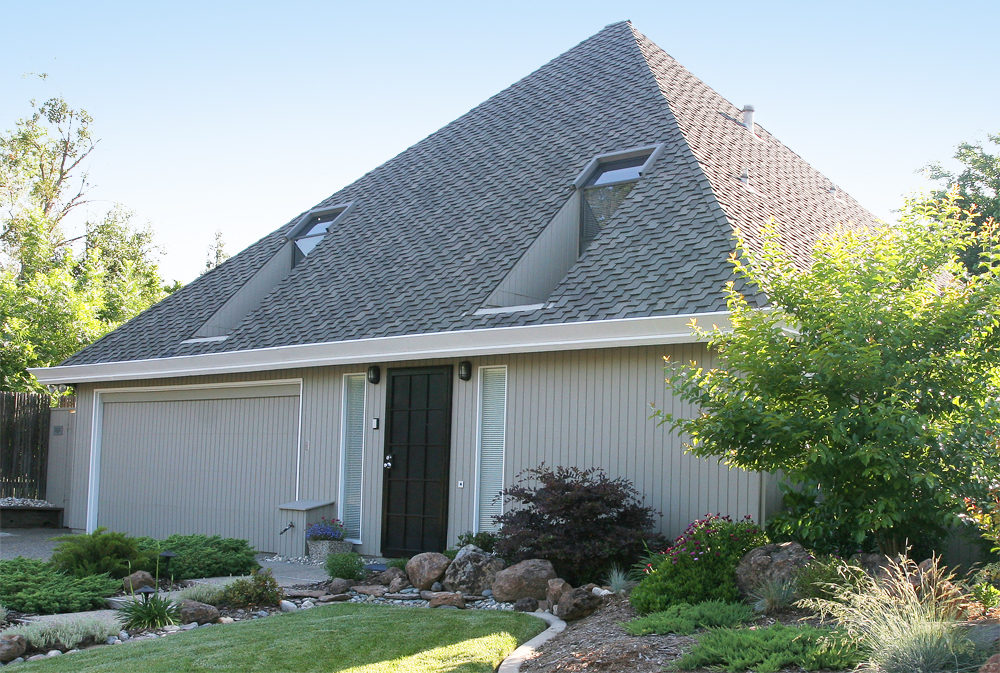
No, it may not be a laugh-out-loud moment. To laugh like that over a mid-century modern tract home, you must turn to Sacramento architect Carter Sparks, who somehow convinced his bosses—the rather reserved and Republican-voting Streng brothers—to let him design some homes shaped like pyramids, and many homes with planting areas for trees in the middle of the living room.
Eichlers have been known to be witty houses, providing surprises, while evoking sly smiles through their detailing, spatial arrangements, and even their placement on the street.
But wait. Is it even OK for architecture to be funny?
The architects of mid-century Googie coffee shops, with their upswept roofs and Space Age freestanding signs, sure thought so. But those are not houses, places where people seek repose.
 |
|
|
Consider, though, the fabulous Queen Anne Victorian homes that dotted the U.S. in the 1890s. Staid critics who lambasted these homes' endless bombast—onion-shaped domes atop spindly Ionic columns; towers festooned with dormers, spindles, brackets, and friezes—would have done better to appreciate the joke.
And how about the Storybook homes of the 1920s that charm to this very day, with their swooping, 'catslide' roofs that evoke medieval thatch, and crenellated towers, where homeowners can scurry to drop vats of hot oil on the heads of invaders?
Ah, but modernism, on the other hand, is all about function, lack of ornament, truth. Where's room for playful in all of that?
 |
|
|
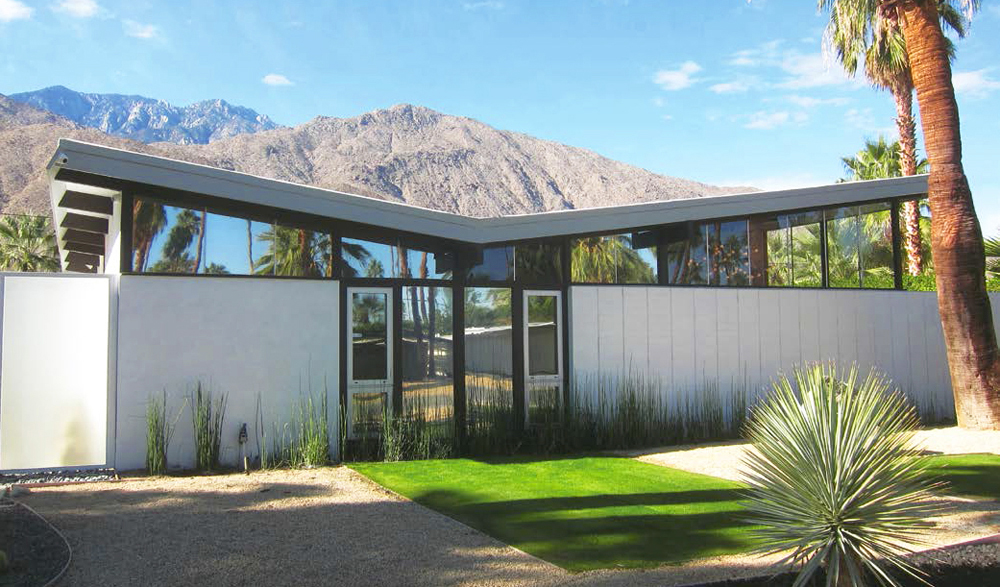
William Krisel, whose firm, Palmer and Krisel, designed most of the mid-century modern Alexander homes in Palm Springs, bristled some years back when we referred to the butterfly and folded-plate roofs that so many of his homes bore as "wacky."
"You call them funny roofs, and you wrote an article calling them wacky rooflines. Those are not architectural terms, and I really resent them," Krisel said, adding, "They are architectural forms, and they are good architectural forms."
Still, author Alan Hess reminded us during a recent talk, 'A Century of Progress: The Bay Area Discovers the Modern Muse - 1890-1990,' that modernists in California, especially Northern California, were more inclined than those elsewhere to focus on joy in their work. Hess even cited a First Century BCE Roman architect.
 |
|
|
"Vitruvius defined architecture as "firmness, commodity, and delight," Hess said. "In the seriousness of some modern architects, delight has kind of been nudged out of the picture. Not in the Bay Area."
Developer Joe Eichler "had a terrific sense of humor," his son Ned told us back in 2005. "He could laugh at himself, about a lot of things." But not, apparently, about butterfly roofs, which he used only about a half-dozen times among the 11,000 homes he built—even though his architects enjoyed using the form for other builders.
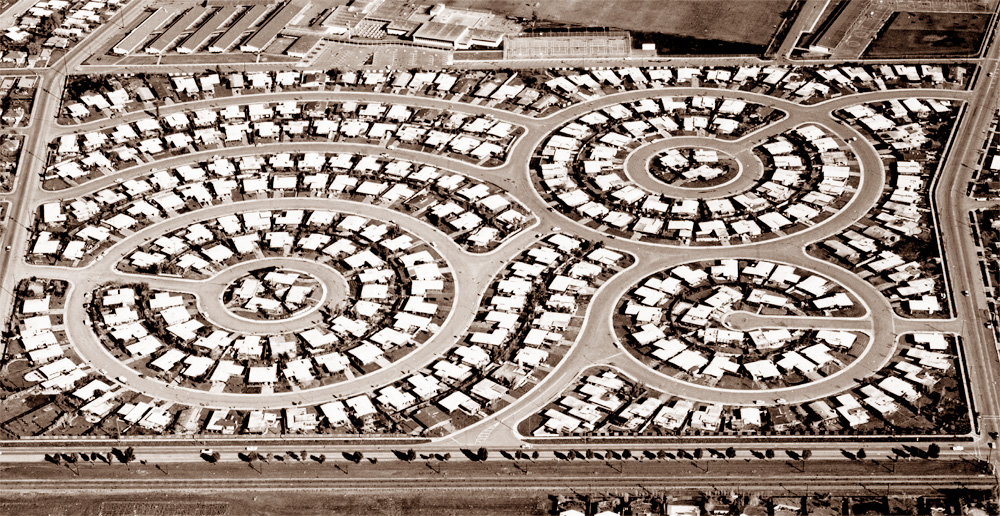
It does take a bit of whimsy to design a neighborhood like Eichler's Fairmeadow in Palo Alto, its streets a series of interlocking circles that, to this day, can drive visitors mad with confusion.
 |
|
|
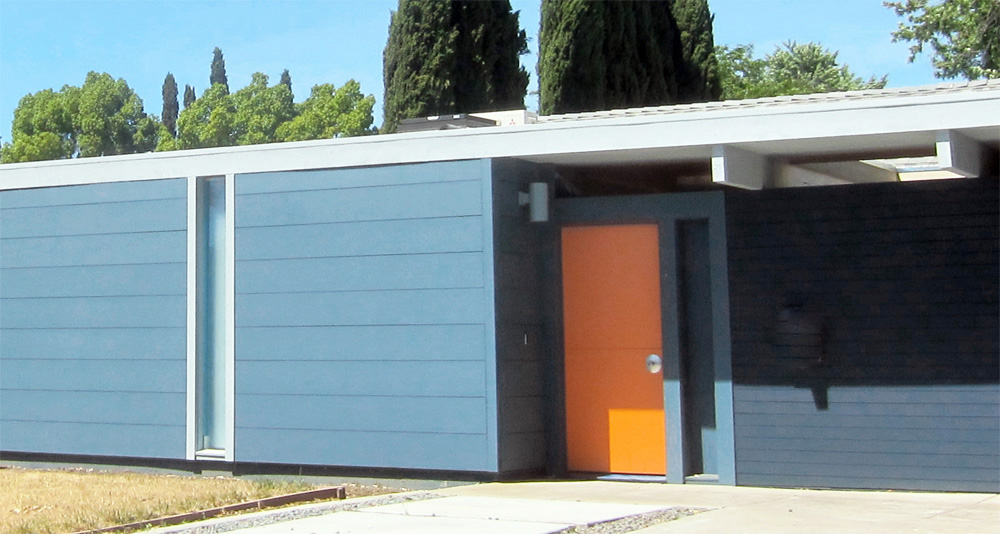
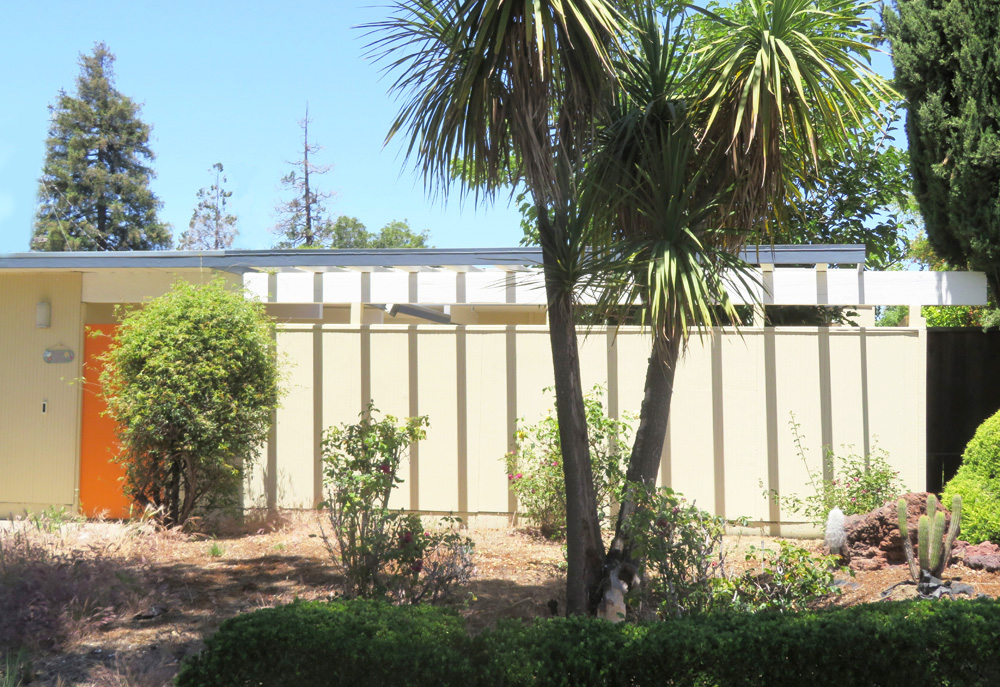
Eichlers may be famous for facades that some non-fans regard as inhospitable. But the front of an Eichler home is far from featureless. Roof beams, often painted on contrasting colors, add zing, in addition to eye-popping colorful doors. In some models, extended beams add texture and cast artful shadows.
And often there are frosted vertical windows, translucent though not transparent. How many 'normal' homes have vertical windows? And what interior mysteries can these windows be hiding?
Further provoking wonder, and sometimes confusion, are enticing views across the tops of atriums, often suggesting that the interior of the house, paradoxically enough, contains a forest.
 |
|
|
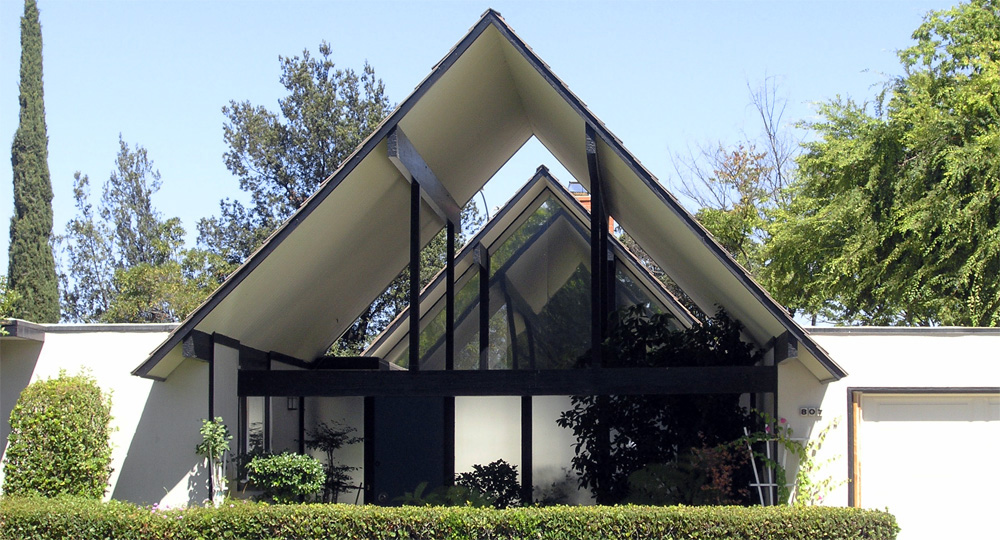
In some of Eichler's later models, a pair of steep gables parade from the front of the house to the rear with an atrium in between. It's a wild effect, almost fooling the eye, suggesting that there is a continuing series of gables going back into the distance, as in a funhouse mirror.
The surprising play of space within Eichlers often has a funhouse element as well. In some models, you enter through an open-to-the-air atrium, proceed to a covered 'loggia' that almost seems like it too is exterior space, and then immediately confront a rear courtyard.
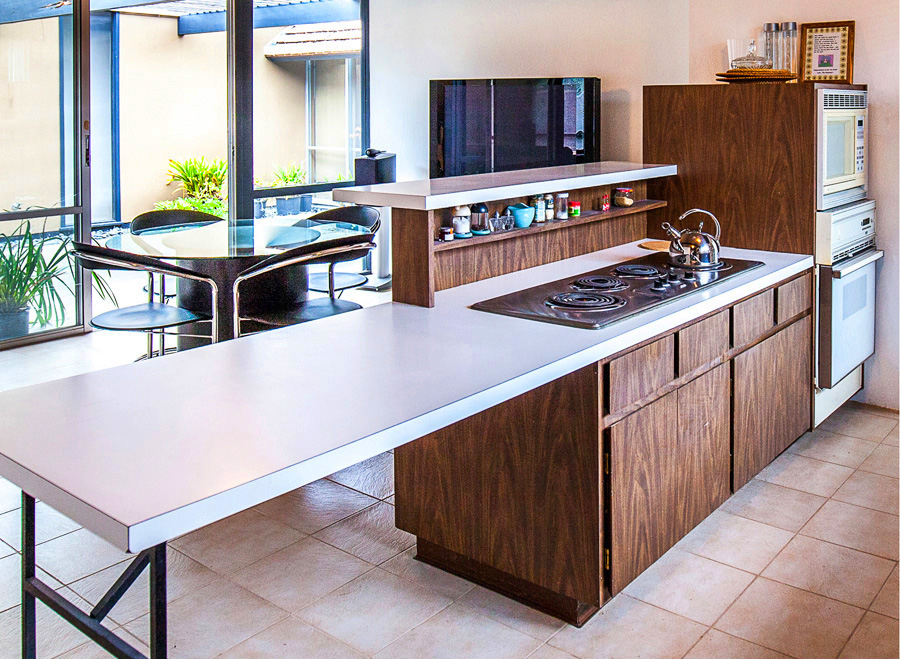
In Eichler interiors we have such playful touches as floating globe bulbs and hidden dining tables that swing out from the kitchen counter. There are people who have lived in their Eichler for years before finally discovering this kitchen feature—and, at long last, let out a big whoop.
- ‹ previous
- 73 of 693
- next ›
Search