


Erving House Shines on - Page 2
 |
|
|
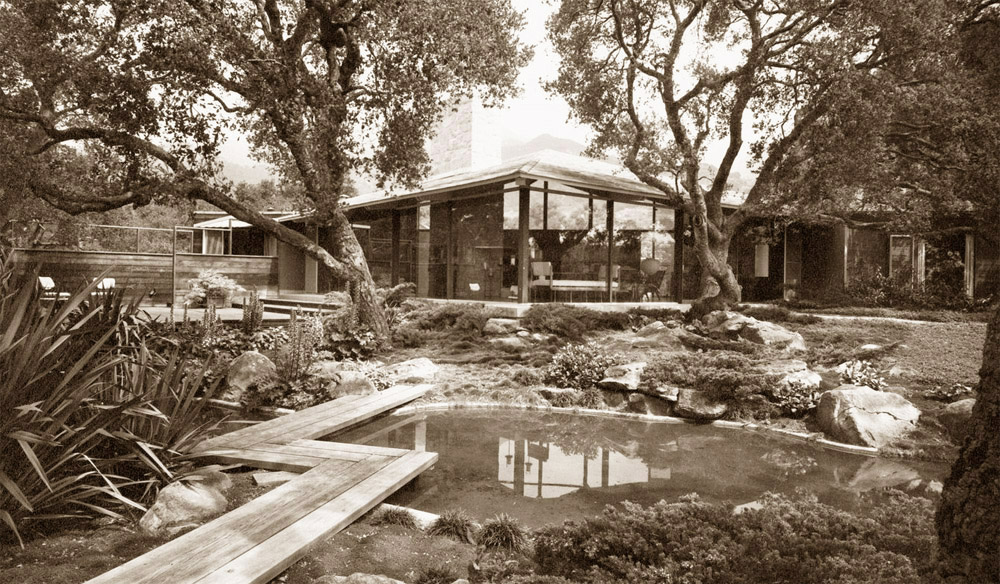
Born in Toledo, Ohio, in 1896, Riggs would head up her own office at a time when women-led firms were extremely rare. Winning a scholarship to attend the University of California at Berkeley in 1918, she started her architectural studies with only four other women.
After moving to Santa Barbara, she became a draftswoman for George Washington Smith, an architect known for his Spanish Colonial Revival style buildings. Smith and his wife took a liking to Riggs, inviting the young architect to join in their architectural trips to Mexico and Europe, and eventually making her a partner in the firm.
In 1928, Riggs obtained her architectural license, opening her own firm in 1931 after Smith died unexpectedly.
 |
|
|
A slowing in architectural commissions at the beginning of World War II led Riggs to close her business and find work as a set designer for MGM and Warner Bros.
After the war ended, she took an interest in modernist architecture, and partnered with Arvin B. Shaw III. Shaw had relocated to the West Coast after having studied at Yale's School of Architecture, and had worked for the New York firm of Harrison and Abramovitz.
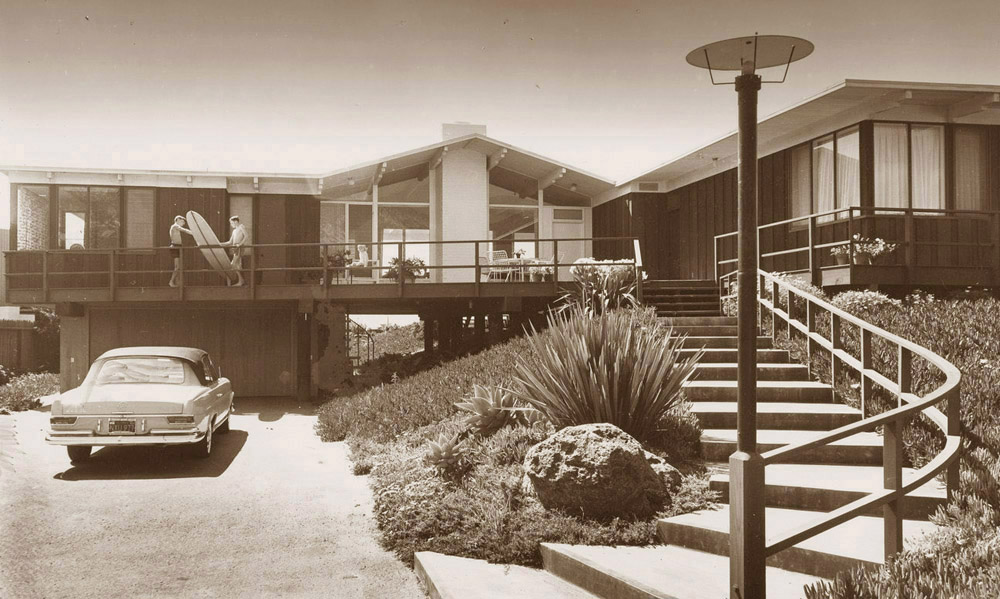
From 1945 to 1951, Riggs and Shaw collaborated, designing residential architecture inspired by the modern houses along the West Coast, integrating them with their sites, and incorporating glass, wood, and other natural materials into refined modern spaces.
 |
|
|
Riggs also used "thin porch posts with intervening glass to exhibit some of the delicacy of form and detailing of a classic Japanese pavilion," notes architectural historian Nicole Hernandez of the City of Santa Barbara.
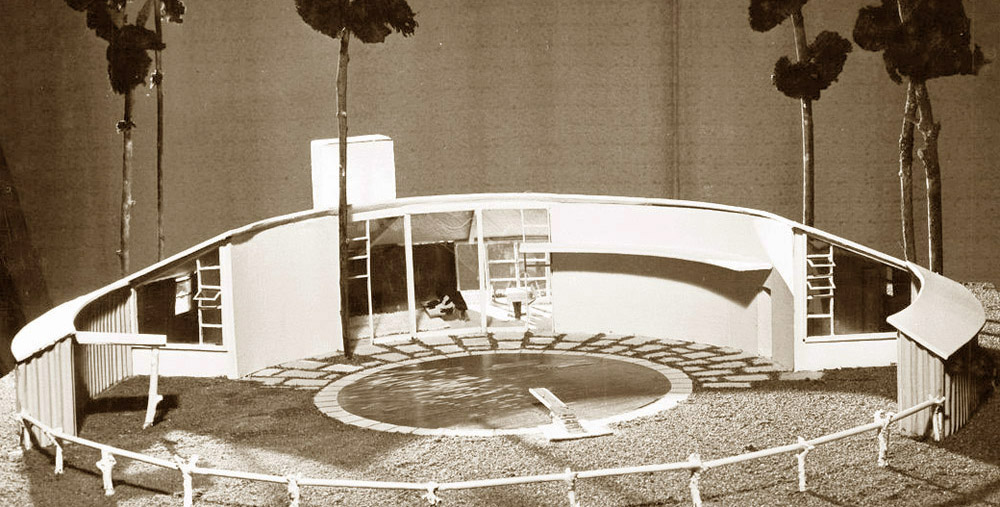
One of their most unusual projects is the 1947 Tremaine Ranch House in Winslow, Arizona. Burton and Emily Tremaine commissioned Riggs and Shaw to design a ranch house for them on the family property. "The circular shape was reminiscent of the nearby Meteor Crater natural landmark," notes the AD&A Museum, UC Santa Barbara archives. While a rendering of the Winslow house exists (see model in the second photo position above), it is uncertain if the house was actually ever built.
Setting out to work on her own in 1951, Riggs continued designing residential as well as commercial buildings. One of her most famous from this period is the Vedanta Temple, an inspired take on South Indian wooden temple architecture.
 |
|
|
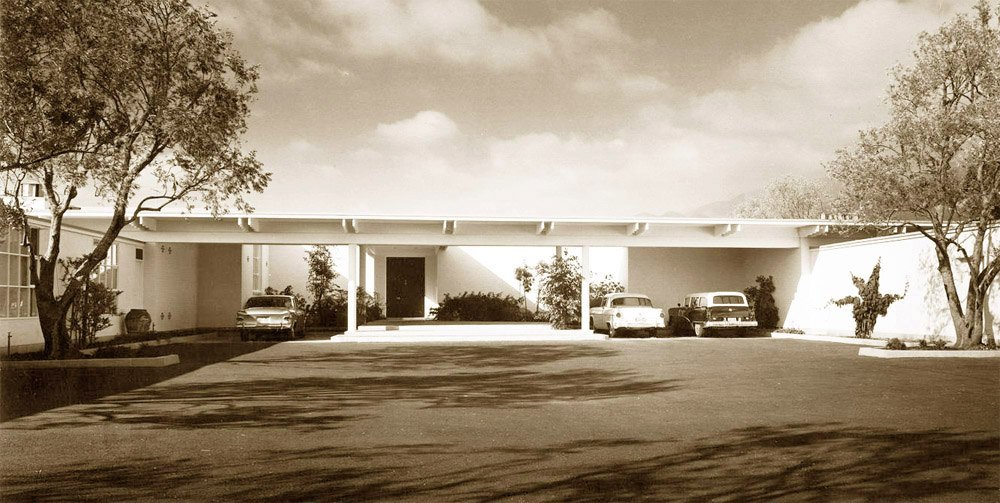
Other modern projects include the 1957-'59 Erdman estate (see photo above) in the Birnam Woods area of Montecito, a low-slung, modern post-and-beam with a motor court and pool.
Riggs was named a Fellow of the AIA in 1960 for her "excellence in design and service to the profession." Seven years later, she was named 'Woman of the Year' by the Los Angeles Times, the first architect ever to be chosen for the honor.
Continuing her practice through 1980, Riggs passed in Montecito in 1984. A yearly scholarship was funded in her name by the Architectural Foundation of Santa Barbara. In 2013, The Lutah Maria Riggs Society was established to raise awareness about her life and largely unrecognized career, and the documentary film 'Lutah - a Passion for Architecture: A Life in Design' followed in 2014.
For a virtual tour of the Erving House (with interviews), click here.
Search