


Artistry of an Eichler Home - Page 2
 |
|
|
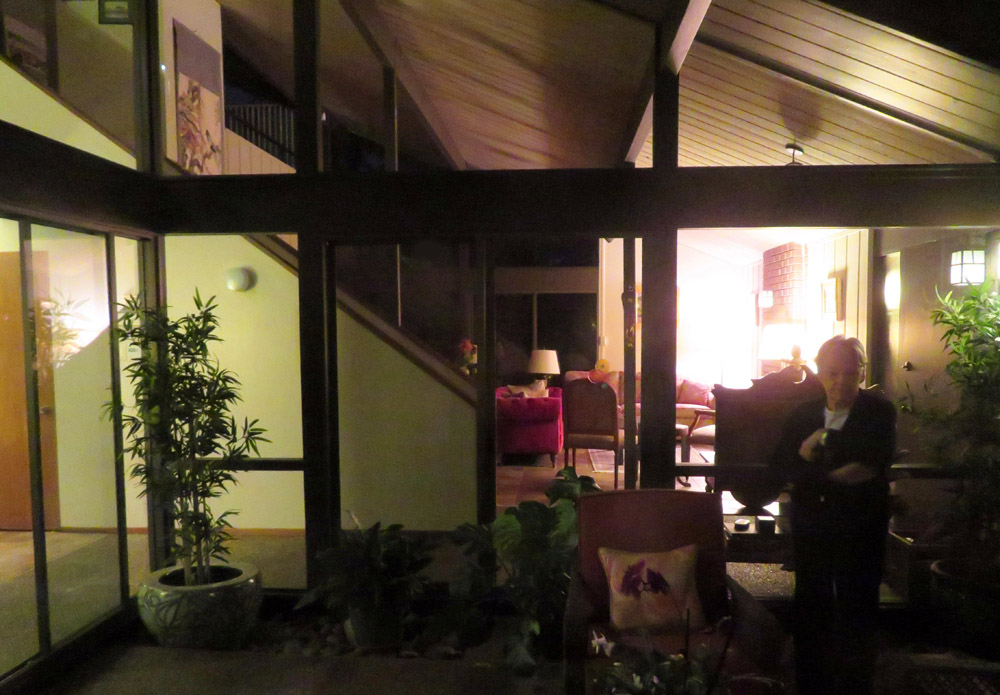
In some of Eichler's later models, with atriums that lead into roofed but otherwise open ‘loggias,’ which in turn lead into uncovered courtyards, it's easy both to see and feel the emotion generated by line and structure.
The glass walls allow people to see multiple spaces at once, and multiple compositions created by the rhythmic arrangement of beams, posts, and walls. Warmth comes from wood panels, the stained ceiling, grass cloth, art, and furnishings. Such complexity of views can create a feeling of joy.
Glass walls and open spaces in an Eichler are about more than opening the interior of the home to nature outside. They are about more than letting the mom of the house keep an eye on her brood while she cooks.
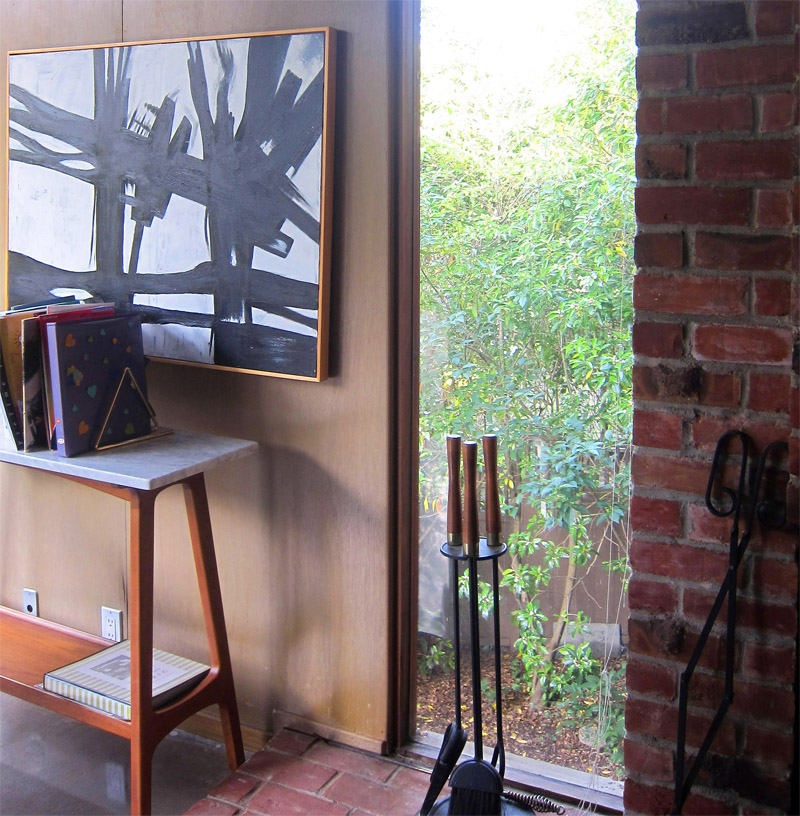 |
The glass and openness allow for complex views that are in themselves artistic compositions that can provoke both joy and wonder.
The drama of an Eichler home starts, quietly and mysteriously enough, before you enter the front door. By generally eschewing front windows—or by supplying some rather oddball front windows, including vertical slits—Joe's architects kept people wondering: what is beyond that brightly painted front door?
The drama increased in 1957 when Eichler atrium houses moved to the fore, sending residents and visitors alike on a journey from the exterior of the house into an interior space that is open to the sky and surrounded by glass walls of interior rooms.
Here, light, vision, sightlines, and a degree of deliberate confusion add a sense of delight—especially at night, when light reflects off several panes of glass surrounding the atrium, and off the glass walls beyond that separate the living areas of the home from the backyard.
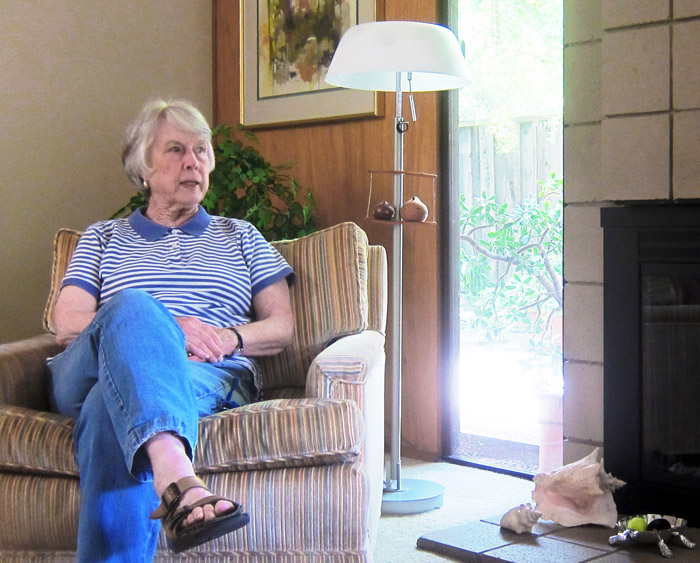 |
Bonnie Borton, whom we met a few years in Palo Alto, appreciated how the structure of her Eichler provided unexpected views that enhanced her mood. "Sitting here in the kitchen, I can look through that clerestory, and I can look to the front and to the back, and what I am seeing is trees," she said. "I think it's really great."
All art, of course, involves a bit of serendipity. Rosa Maria Garfunkel, whose home is in San Jose's Fairglen, described one such example a few years ago, after telling us that she was "in heaven" on discovering a home with "light in the atrium, light in the backyard."
"I like light, and I like the mood of the day," she said. "At nighttime you can see the moon reflected on the floor of the house. You're up at 11 o'clock at night, and it's a bright moon, and you can see the light of the moon radiating through the whole house. For me those sorts of things are magical."
- Login to post comments
Search