


Putting the Desert on the Map
 |
|
|
The building at 121 S. Palm Canyon Drive can easily get overlooked by visitors to downtown Palm Springs—even by those laser-focused on the city's mid-century modern treasures.
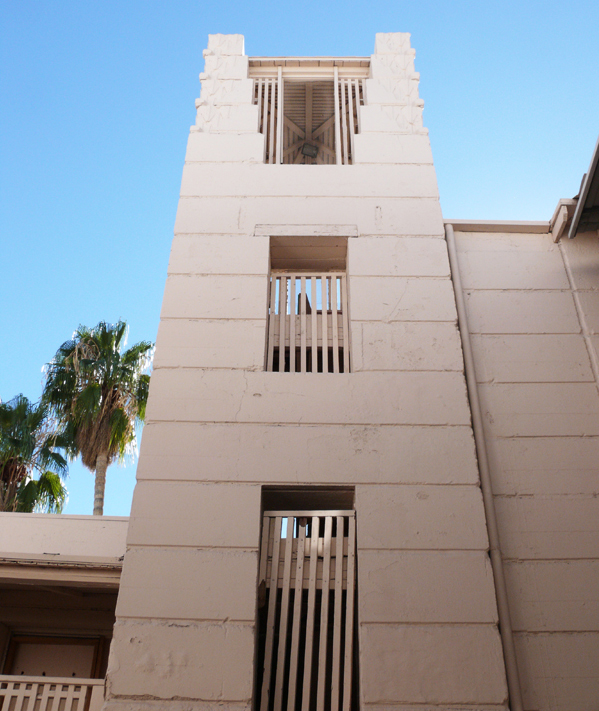
Next time you're in town, take a closer look at that structure, half hidden behind the Oasis Commercial Building. It's the remains of Palm Spring's oldest modernist structure—the still-picturesque concrete tower of the Oasis Hotel, which opened in 1924 to a design by Lloyd Wright, Franks' son.
The tower and other fragments of the once-elegant resort are more than a century old. In author Alan Hess's telling, they represent "one of the most original and significant developments in modern architecture in the 1920s."
 |
Note Hess's lack of geographical qualifications. The importance of the 1924 building by Wright is not local, statewide, or nationwide; it's international, he is saying.
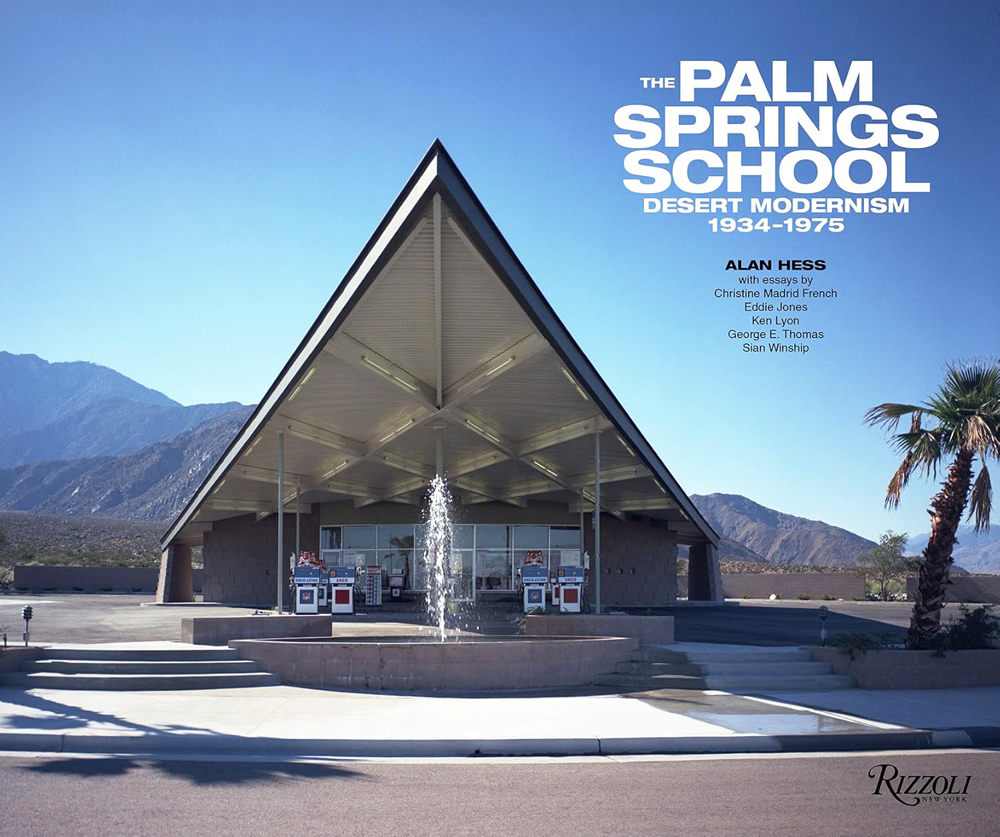
Indeed, Hess's essay in The Palm Springs School: Desert Modernism 1934-1975, which is the centerpiece of a new book that includes essays by five others, is a reshaping of the geography of modernism.
Hess's account of modern architecture flips the usual tale on its head. Rather than a movement that began exclusively in Europe, and then gradually moved to the United States and even more gradually to California, he sees an evolution in which California and other American regions played a leading role.
 |
Note Hess's comment on Richard Neutra, the Viennese modernist who is often described as importing modernism to California. Not quite. "Richard Neutra traveled 6,000 miles from Vienna to Southern California not to introduce modernism, but to learn and work in the modern environment that existed here," Hess says.
There are many books about Palm Springs modern architecture. But The Palm Springs School goes deeper, telling the story from its inception, profiling the leading architects, providing thumbnail resumes of others, and branching into such topics as the growth of spa culture and the importance of the Cahuilla Indians, who own much of the city.
Still, Hess's argument for the importance of Palm Springs and, by extension, California as a center of modernism, makes up the book's core.
- Login to post comments
Search