


Beaming with Wit and Whimsy - Page 2
 |
|
|
"Vitruvius defined architecture as "firmness, commodity, and delight," Hess said. "In the seriousness of some modern architects, delight has kind of been nudged out of the picture. Not in the Bay Area."
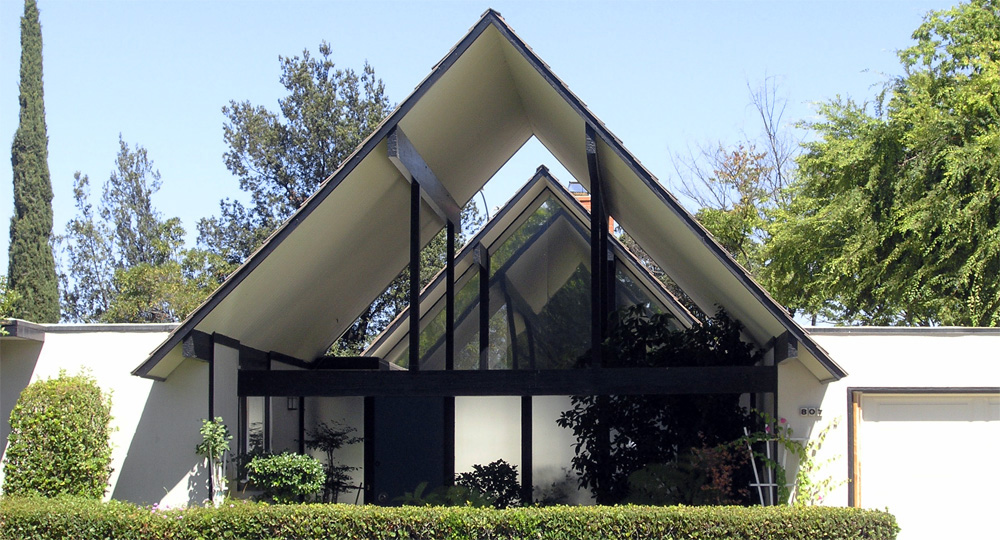
Developer Joe Eichler "had a terrific sense of humor," his son Ned told us back in 2005. "He could laugh at himself, about a lot of things." But not, apparently, about butterfly roofs, which he used only about a half-dozen times among the 11,000 homes he built—even though his architects enjoyed using the form for other builders.
It does take a bit of whimsy to design a neighborhood like Eichler's Fairmeadow in Palo Alto, its streets a series of interlocking circles that, to this day, can drive visitors mad with confusion.
 |
|
|
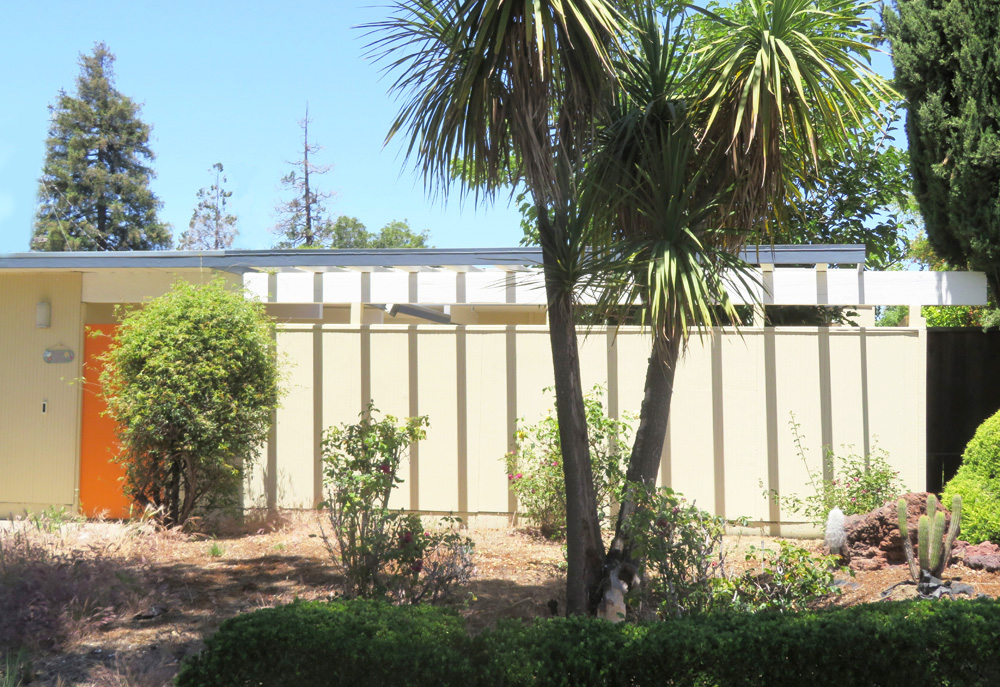
Eichlers may be famous for facades that some non-fans regard as inhospitable. But the front of an Eichler home is far from featureless. Roof beams, often painted on contrasting colors, add zing, in addition to eye-popping colorful doors. In some models, extended beams add texture and cast artful shadows.
And often there are frosted vertical windows, translucent though not transparent. How many 'normal' homes have vertical windows? And what interior mysteries can these windows be hiding?
Further provoking wonder, and sometimes confusion, are enticing views across the tops of atriums, often suggesting that the interior of the house, paradoxically enough, contains a forest.
 |
|
|
In some of Eichler's later models, a pair of steep gables parade from the front of the house to the rear with an atrium in between. It's a wild effect, almost fooling the eye, suggesting that there is a continuing series of gables going back into the distance, as in a funhouse mirror.
The surprising play of space within Eichlers often has a funhouse element as well. In some models, you enter through an open-to-the-air atrium, proceed to a covered 'loggia' that almost seems like it too is exterior space, and then immediately confront a rear courtyard.
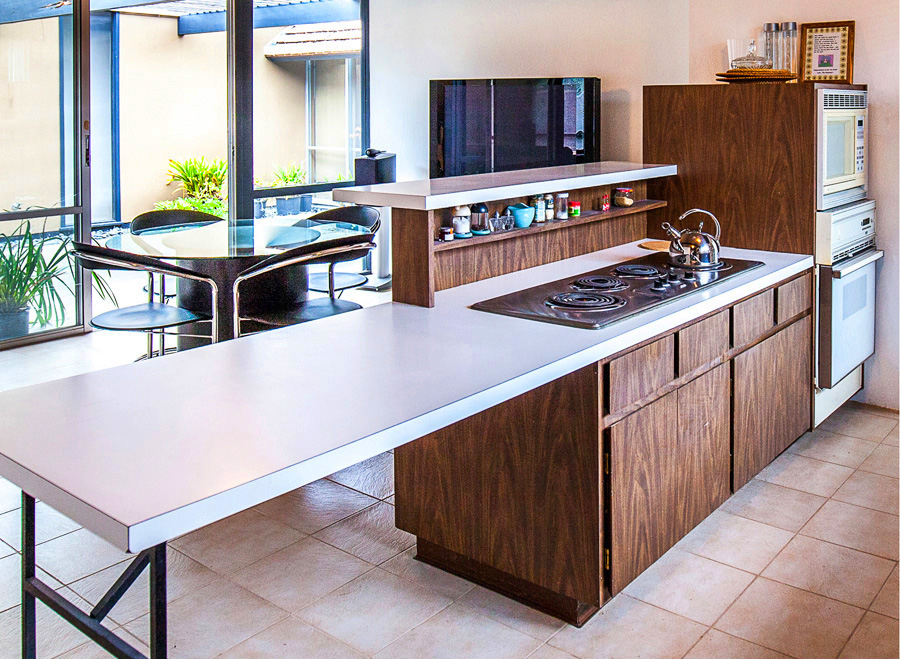
In Eichler interiors we have such playful touches as floating globe bulbs and hidden dining tables that swing out from the kitchen counter. There are people who have lived in their Eichler for years before finally discovering this kitchen feature—and, at long last, let out a big whoop.
- Login to post comments
Search