



Protecting Fairglen’s Eichlers
 |
|
|
Few neighborhoods are as devoted to all things Eichler as Fairglen in San Jose—which is saying a lot considering the legions of devotees who fill so many of builder Joe Eichler's mid-century modern neighborhoods.
The wildly popular Fairglen Art Festival brought neighbors together for three decades, beginning in the early 1960s. Block parties and Joey Awards (handed out for exemplary home restorations and improvements( have also kept neighbors engaged.
Most notably, Fairglen Additions became only the third Eichler neighborhood to be added to the National Register of Historic Places, in 2019. At that time only two households in the 218-home neighborhood objected.
 |
Now neighbors have taken their effort to celebrate and preserve Fairglen's architectural heritage—and sense of place and community too—one big step further, by working with the city to establish both enforceable architectural and landscape regulations and advisory guidelines.
Sally Zarnowitz, an architect and Fairglen resident who wrote the nomination that put Fairglen on the National Register and on the state Register of Historical Resources, says the regulations and guidelines will benefit both the neighborhood and other San Jose neighborhoods—though the enforceable regulations would apply only to Fairglen.
For now.
 |
If and when other San Jose Eichler tracts follow Fairglen's lead, they too would be covered by the regulations. Zarnowitz says she worked hard to make it easier for other neighborhoods to gain historic designation by writing a 'multiple property designation' for all the Eichlers in San Jose. In all, there are about 480 Eichlers in San Jose, in five tracts.
Both the regulations and guidelines are detailed in a 68-page draft document, 'San Jose Neighborhoods Objective Design Standards,' prepared by consultants Page & Turnbull, the architectural firm that did similar work for Eichlers in Palo Alto and the city of Orange.
 |
A final version of the draft Design Standards will come before San Jose's Historic Landmarks Commission and then City Council by fall 2025, Zarnowitz says. Neighbors expect approval, since there is little opposition.
"These guidelines are a way of helping homeowners work on their houses," Zarnowitz says, adding that they already appear to be having a beneficial effect even before official adoption.
 |
|
|
"There have been a few recent projects, including coverings of atriums, where the people have worked well with the building department," she says.
"One advantage of the standards and guidelines is that in San Jose, if you are following the standards, you would be able to get a permit at the administrative level. It would not involve any public hearing," Zarnowitz says. "That would avoid the hearing and the expense, which is more than if you just need a building permit."
The standards, which are the enforceable rules, would come into play only if a homeowner is seeking a building permit. They apply only to exterior changes that can be seen from the street, mostly the front façade, but also portions of the side and rear.
 |
|
|
The report calls the side and rear areas 'semi-private realms,' and says, "what occurs in the rear and side of the building and the lot has the potential to affect neighboring properties, especially since the Eichler homes have large window walls at the back of the buildings."
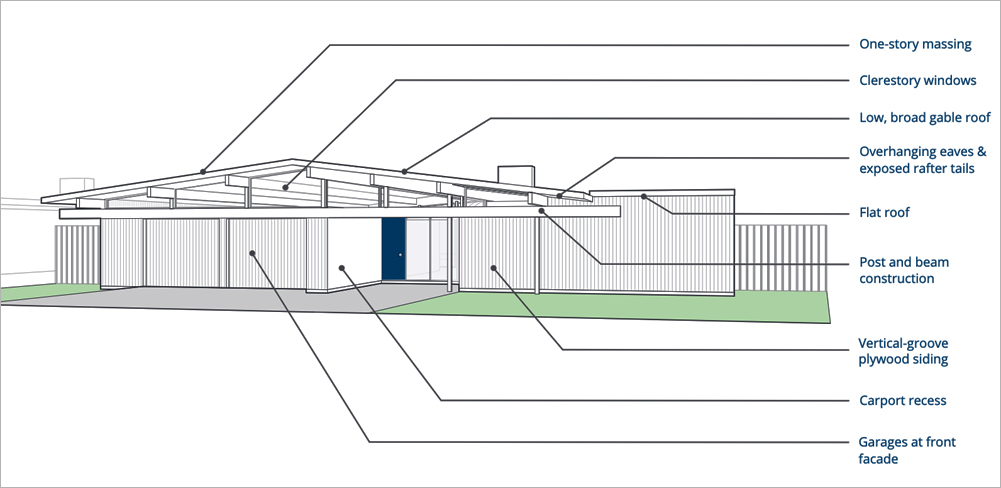
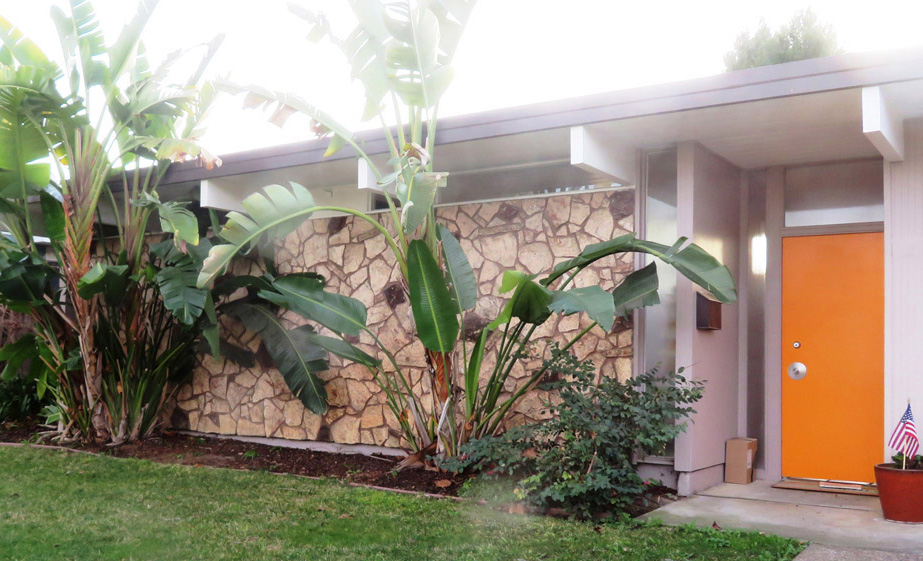
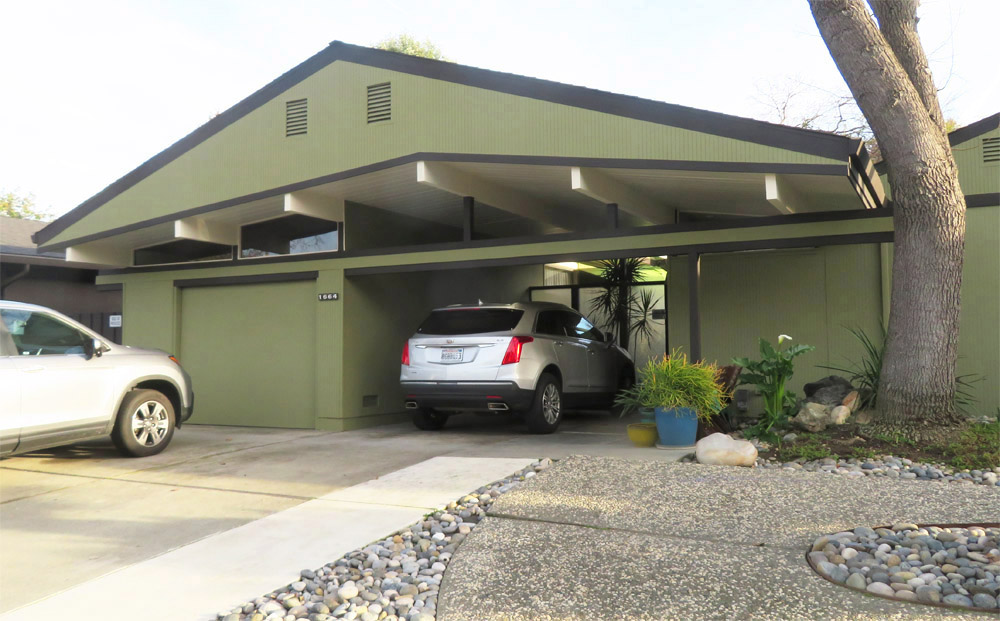
The standards and guidelines deal with roofs, front doors, fencing, plantings, windows, and much more. Photos and drawings make clear what changes can or cannot be made, and what changes are advisable—or not.
The standards and guidelines "will cover proposed exterior changes to Eichler houses listed on the San Jose Historic Resources Inventory that require a Single-Family House Permit or other Planning permit that involves historic review," the document says.
 |
|
|
According to the document, homeowners whose homes do not conform to the standards would not be required to restore them to the Eichler look.
The goal is for the neighborhood as a whole to retain its historic appearance as much as possible. "Changes may occur at individual properties so long as the cumulative changes do not alter the tract to the extent that, as a whole, the historic district's character is diminished," the report says.
Although ADUs (accessory dwelling units( are permitted and encouraged by state law, and trump most historic protections, the guidelines strive to ensure that added housing units conform to the Eichler look.
 |
|
|
"Those [ADUs] that are highly visible from the street, not compatible with the surrounding scale, mass, and style of the neighborhood, and cause extensive removal of historic materials or features are generally inappropriate as they can negatively affect the existing character of the neighborhood," the document says.
"Modest, single-story additions and accessory structures, which are located to the sides or rear of existing buildings, are more appropriate…."
Zarnowitz says people in Fairglen seem to buy into the idea of doing remodels right. "Work has been going on in the neighborhood, and it all seems to be following the guidelines as far as I can see," she says. "It seems that everyone has been following the spirit of the guidelines."
- ‹ previous
- 488 of 693
- next ›
Search