

Erving House Shines on
 |
|
|
Imagine, if you will, the life journey of an enterprising and undaunted California woman who, as an aspiring architect and free spirit celebrating her first taste of independence in the early 1900s, met the road ahead by purchasing her own Chevrolet roadster while still in her twenties.
Then, at 30, she designed a Spanish-style farmhouse for herself against the beautiful backdrop of Santa Barbara before moving on to a long, prolific career in architectural design.
Forging a new path for women with her uncompromising nature, she became the first licensed female architect in Santa Barbara, and years later, the first woman honored as a Fellow in the California American Institute of Architects.
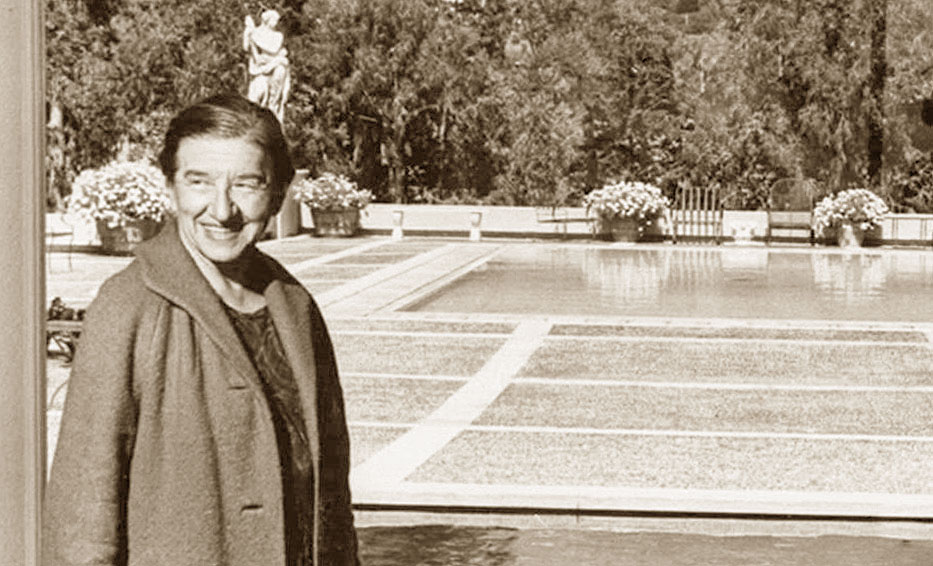
Lutah Maria Riggs, the subject of our story here, even dabbled in postwar modern design for several years—which takes us to the news of the day. Riggs, best known for her Spanish Colonial Revival designs, grabbed our attention recently with her stunning Alice Erving estate, a lovely mid-century modern design that's now on the market in the affluent community of Montecito, near Santa Barbara.
 |
|
|
A stone's throw from Montecito's Lotusland, one of the most beautiful botanical gardens in the world, the luxury property at 650 San Ysidro Road is listed at $17.975 mil by Lucas Ebbin of Compass Realty.
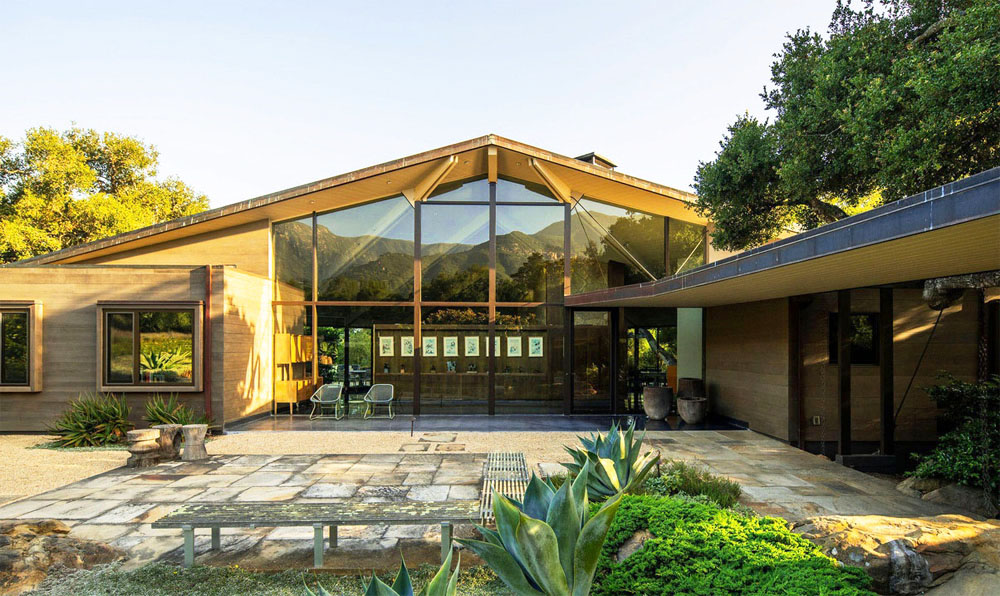
Known as the Erving House, the 2,951-square-foot, 3-bedroom, 4-bath home is set on 2.7 acres, an architectural masterpiece dubbed a "glass tent" by Time magazine in 1951 while perfectly describing the brilliant quality of light and space.
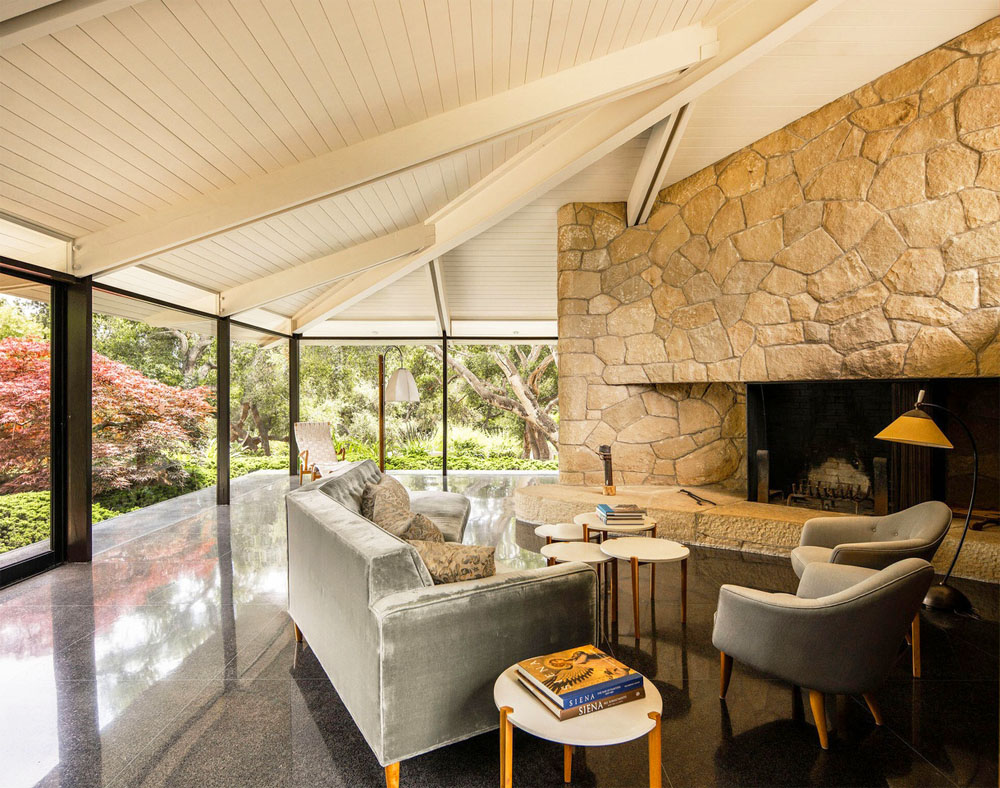
The dramatic main living space features two lower rectangular blocks on each side of a high, triangular-shaped, glass-enclosed space. A sculptural fireplace, clad in stone, anchors the area, providing architectural drama.
In a note by David Gebhard referencing the Erving House, the architectural historian explains that Riggs shares qualities with several of America's modernists of the late forties, "anticipating the fascination with the use of 'pure' geometric forms which appreciably expanded within American architecture in the 1950s."
 |
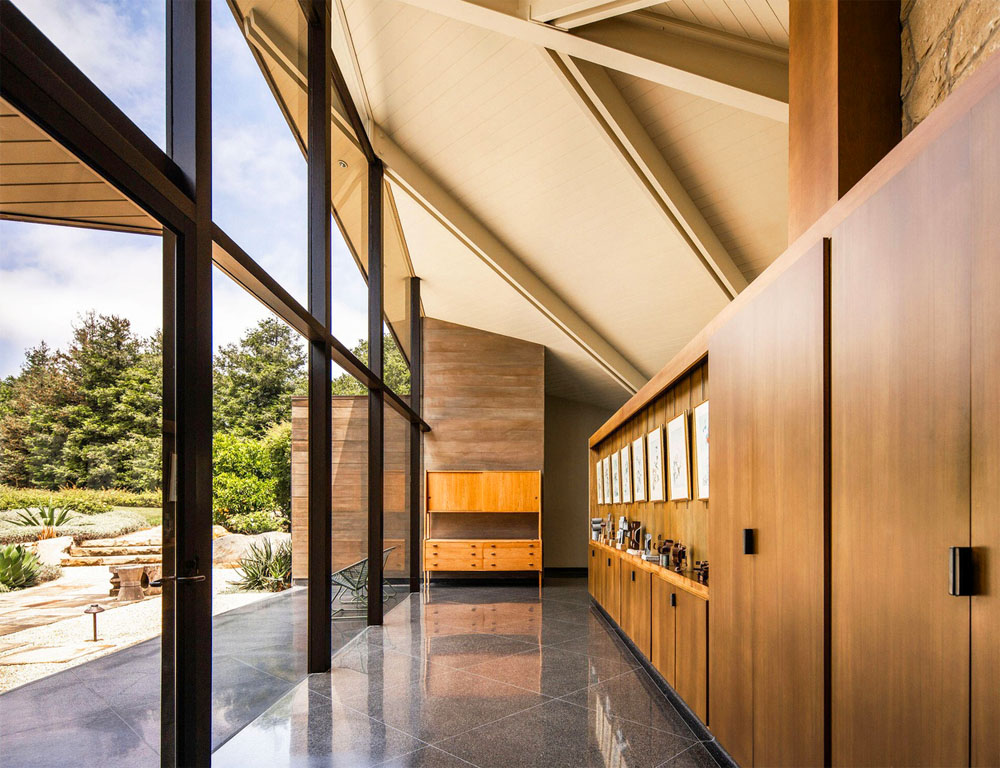 |
Full-height walls of glass offer a portal to scenic mountain vistas and impeccable gardens. Originally designed for California living by landscape architect Thomas Church, and respectfully restored by Susan Van Atta, lavender fields spring to life alongside orchards, oaks, and redwood groves.
Linking the structures to their natural setting, stone steps transition from one level to another, shaded by a living canopy of Australian tree ferns. There, a bridge arches over a serene koi pond.
Designed by Riggs in collaboration with architect Arvin B. Shaw III, the Erving House allows us a view into the architect's mid-century period.
Working for half a century beginning in the 1920s, Riggs is primarily known for her early California modern architecture that blended modernist and Spanish Colonial Revival styles.
Search