


How ‘Historic’ Status Pays Off
 |
|
|
Can you think of an ideal recipe for restoring a neighborhood of Eichler homes, many of which may have deteriorated or been badly altered over decades?
The city of Orange seems to have found such a recipe—with a result so tasty that close to a third of Eichler owners have gobbled it up.
In fact, so many Eichler homeowners in Orange have taken advantage of what's on the city's menu that service has been temporarily halted, causing worry about owners who had been lining up for a bite.
 |
|
|
But before getting into that, let's list the ingredients for this recipe:
• Owners who love their Eichlers. Check. (That's been the case for the Eichlers in Orange for many years.)
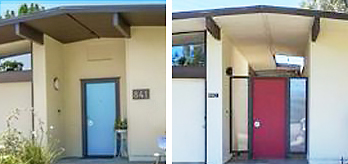
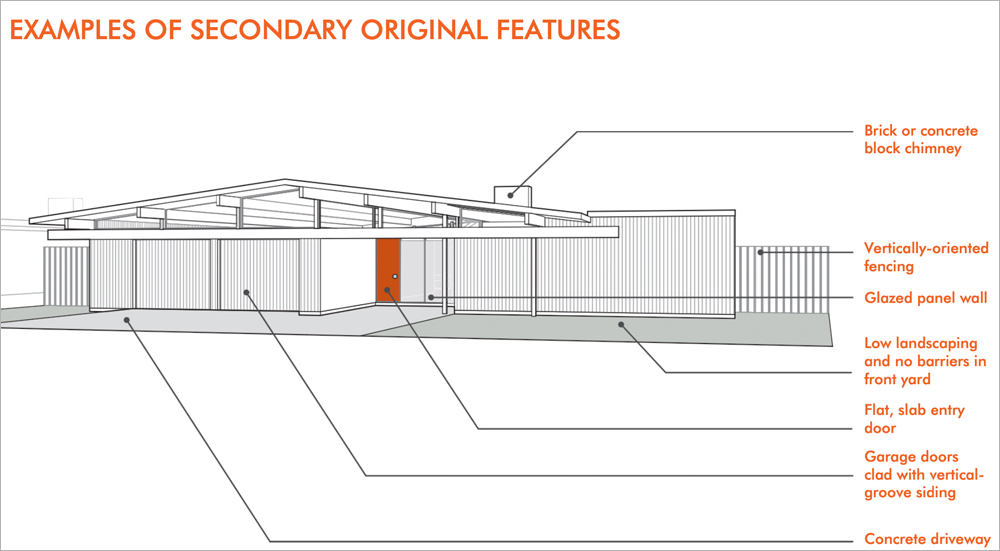
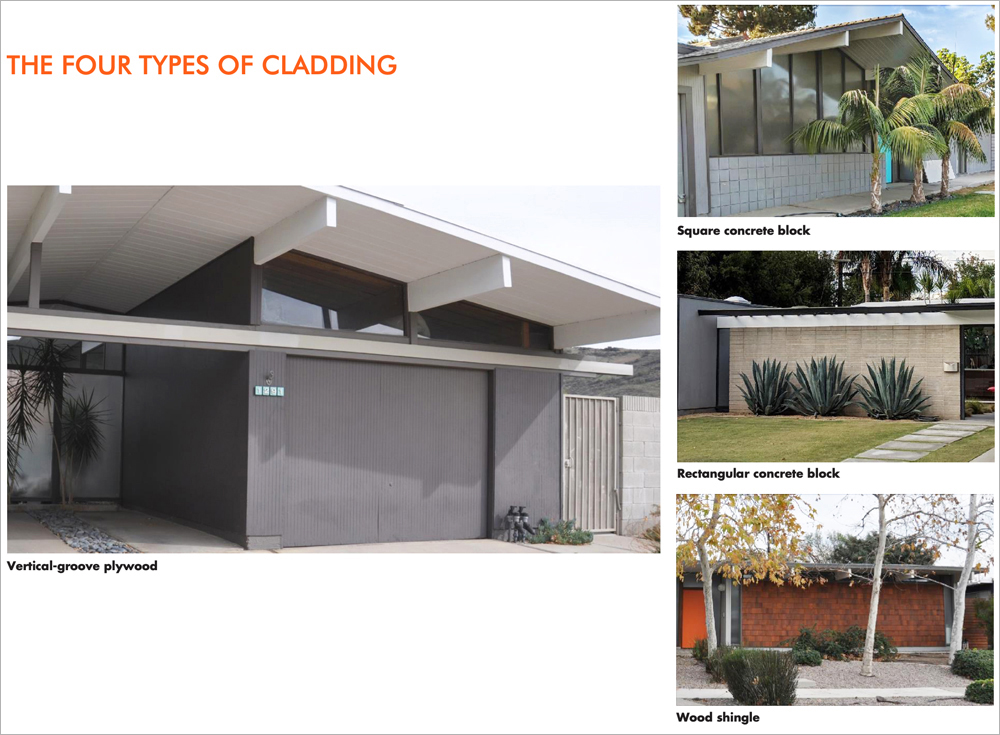
• Clear instructions for how to preserve and restore the homes—and standards that require owners to remodel exteriors visible from the street in appropriate ways, if and when they do remodel. Check. (The city of Orange adopted such guidelines and rules in 2018, when it made all three of the neighborhoods—Fairhaven [1960], Fairmeadow [1962], and Fairhills [1964]—historic districts.)
• And finally, how about some incentives to make the recipe truly irresistible? Check. (Orange OK'd use of the state's Mills Act to lower property taxes for homeowners who use the saving for historically appropriate home improvements.)
 |
These savings can be substantial. Carol Tink-Fox, an architect who lives in Fairmeadow and has helped neighbors qualify for the Mills Act and do remodels, says the tax savings for her home is $6,000 a year.
Starting a decade ago, and accelerating once the Mills Act went into effect seven years ago, "the neighborhood has really come up in its presentation, the houses are just much better kept up, and the yards are nicer," Tink-Fox says.
As incentives from the Mills Act kick in, she adds, "I do think that there's a momentum, that kind of gets instilled. Once some people start doing things [to their homes], others are starting to make those improvements as well."
Anna Pehoushek, Orange's assistant community development director, says the district has helped lead to "a huge escalation in property values in these neighborhoods."
 |
|
|
Mills Act benefits, available only to properties within the historic districts that 'contribute' to their historic look, come with contracts that require the savings to be used for maintenance and improvements that restore or preserve historic features or affect the infrastructure of the home.
The popularity of the contracts is striking: out of about 330 Eichlers, 84 have signed up for contracts—so far.
The benefits of the historic district go beyond the Mills Act, Pehoushek says. The district "gave us the ability to establish historic design standards. They have been effective in every tract. Because of them, we have been able to stave off some inappropriate changes to the Eichlers."
"And they have given guidance to new owners when the properties have changed hands, which many have done recently," she says.
 |
|
|
Perhaps the most striking individual result of the district is one remodel Ting-Fox worked on: helping a neighbor remove an unsightly attic addition that had been on the home for decades. Because of it, the home did not 'contribute' and could not benefit from the Mills Act.
"They had to remove the attic addition in order to become a contributing structure in the historic district," Ting Fox says. "Then they applied for the Mills Act and got the tax break. The ultimate goal was to get on the Mills Act, and that motivated the restoration."
Mario Cardona and his wife, Tiffany Chen Cardona, who moved to Fairmeadow shortly before the district was created, bought a house that had lost some of its character and began learning about and appreciating Joe Eichler. "It's not just the house," Chen Cardona says, "it's Joe's own story, that in a time when people were blatantly racist, he disagreed with that. That is a story worth preserving."
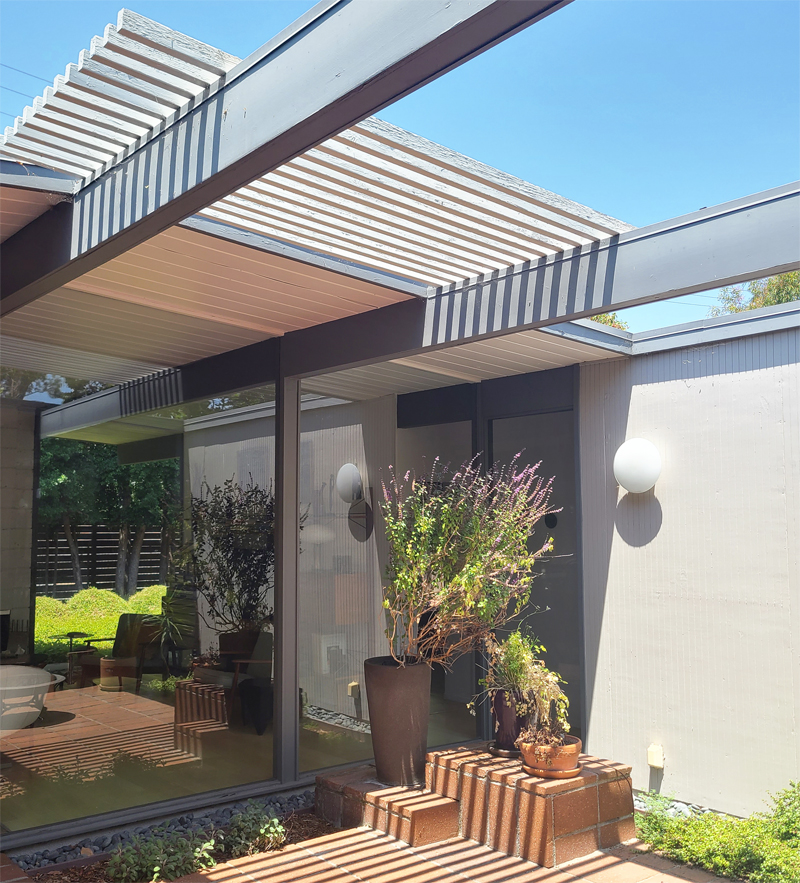
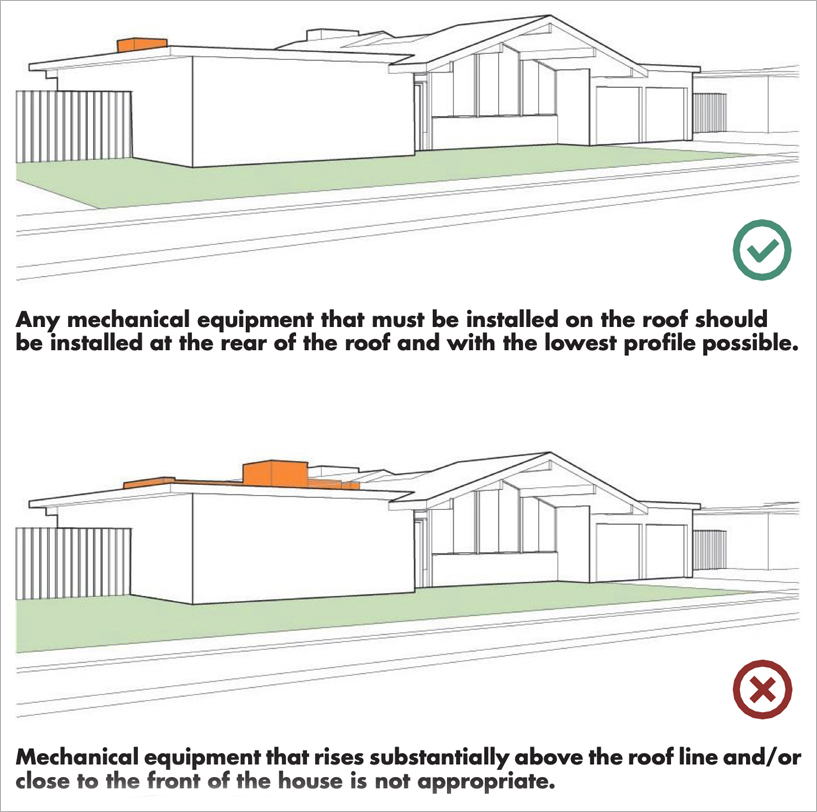
"We used the Mills Act break to restore the facades and are now working on other upgrades, including HVAC and the roof," Cardona says. "We can't put a big condenser on top of the roof. Any new utilities have to be unobtrusive and not visible from the street."
 |
"The process [of working with the city] was very easy," Chen Cardona says. "It was great to get tax benefits for doing things to the house we were going to do anyway."
However, Anna Pehoushek says, "There's a big subsidy on the part of the city for each contract, plus the property tax loss. And the city is facing a deficit," she says. At the end of 2024, the City Council paused the Mills Act program temporarily, she says, and is working on improvements. "Many cities have stricter criteria for properties that participate," she adds.
She notes that for some owners, future use of the Mills Act factored into the purchases of their homes. Some worry they may not be able to benefit.
It is not likely, though, that Orange will drop the act, because the city understands the value of preservation, Pehoushek says. The Eichlers, she says, are worth preserving because "they are a distinctive part of the character of the community." She adds, "We enjoy being a city that is recognized for caring about our distinctive architectural resources."
- ‹ previous
- 346 of 693
- next ›
Search