

Ready for a Tax Break? - Page 2
 |
|
|
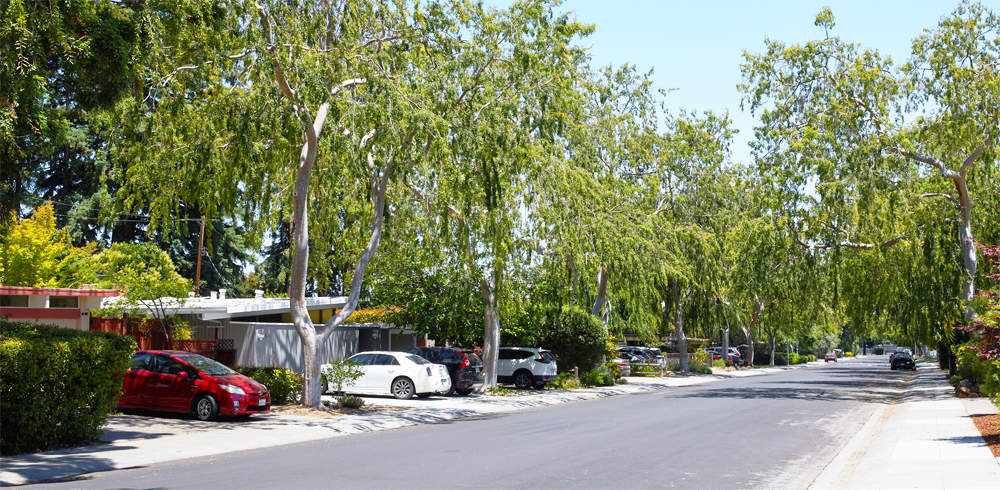
State-sponsored and enacted in 1972, the Mills Act Program is considered "the single most important economic incentive program in California for the restoration and preservation of qualified historic buildings by private property owners," according to the Office of Historic Preservation.
Mills Act legislation grants participating cities and counties the authority to enter into contracts with owners of qualified historic properties, provided owners actively participate in the restoration and maintenance of their properties while receiving tax relief.
In addition to tax relief, Mills Act owners can receive support from their local office of historic resources, which reviews projects for conformance with the Secretary of the Interior's Standards for Rehabilitation.
"In this way," OHP adds, "the program creates a partnership between the City and property owners, with active input and assistance provided to owners as they restore, rehabilitate, and maintain their properties."
 |
|
|
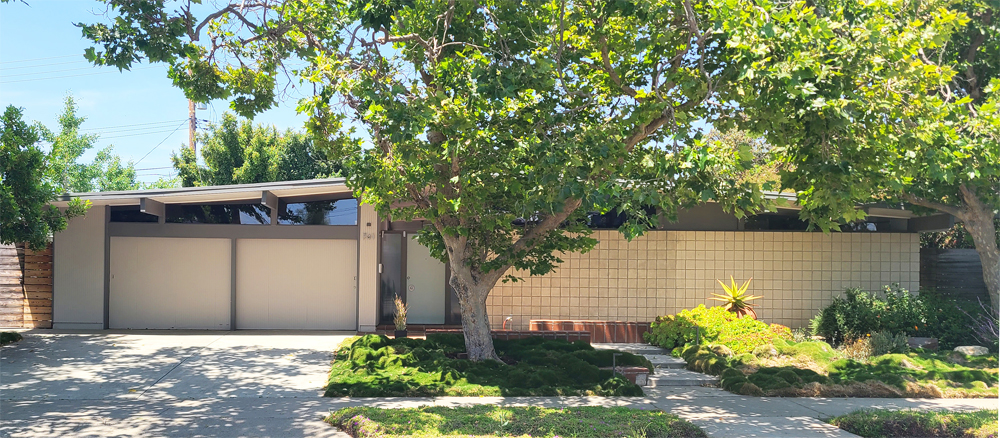
Mills Act contracts begin with an initial ten-year term, with automatic yearly extensions. In addition, if and when a qualifying homeowner sells their home, the contract would carry over to the next owners along with the same rights and obligations.
Accessory Dwelling Units (ADUs), which are now permitted under state law, are considered under the Mills Act Program on a project-by-project basis. Design guidelines work to achieve compatibility with Eichler design characteristics, encouraging accessory structures to be built to the sides or rear of existing homes.
The largest Mills Act Historical Property Contract program in California is in the City of Los Angeles. Since the program was enacted in 1996, it has achieved tremendous success, and is currently undergoing an in-depth policy review.
"The Mills Act is the most important and accessible incentive tool for preserving and maintaining cultural resources throughout Los Angeles," says Andrew Salimian, Director of Advocacy for the Los Angeles Conservancy, in an April 2025 letter to the Cultural Heritage Commission outlining considerations for the proposed changes.
 |
|
|
"Following a nearly five-year hiatus," adds Salimian, "the Conservancy is pleased the Mills Act will be reactivated and updated to address current needs for Los Angeles and this essential program. We support efforts to make the program more equitable and distribute its application to low-resource areas…"
Kudos to Eichler residents throughout California for working together to build in safeguards, while raising the bar to honor their architectural neighborhoods and inspiring other architectural communities to do the same. That's the Eichler spirit!
Interested in finding out if your community participates in the Mills Act Program? Since each local government establishes its own criteria, contact your city's representatives to determine eligibility criteria, contract terms, and application path. Click on this link to find the Mills Act contacts for cities and counties throughout California.
Search