



Putting the Desert on the Map
 |
|
|
The building at 121 S. Palm Canyon Drive can easily get overlooked by visitors to downtown Palm Springs—even by those laser-focused on the city's mid-century modern treasures.
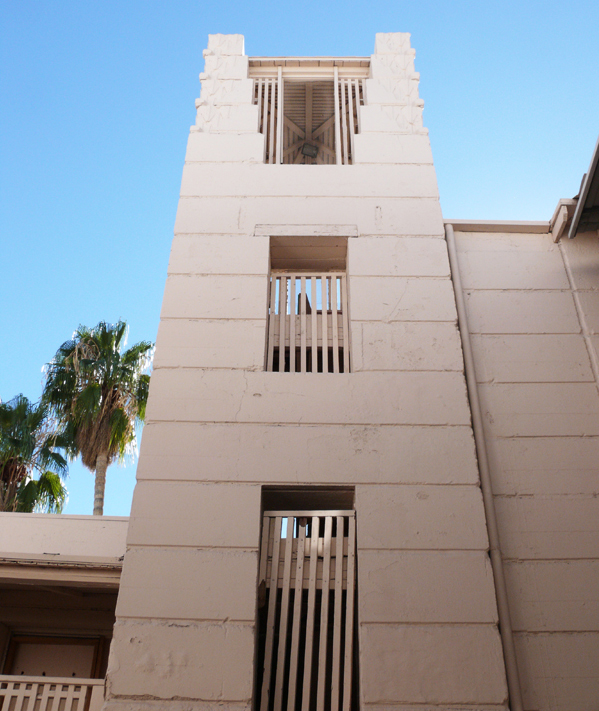
Next time you're in town, take a closer look at that structure, half hidden behind the Oasis Commercial Building. It's the remains of Palm Spring's oldest modernist structure—the still-picturesque concrete tower of the Oasis Hotel, which opened in 1924 to a design by Lloyd Wright, Franks' son.
The tower and other fragments of the once-elegant resort are more than a century old. In author Alan Hess's telling, they represent "one of the most original and significant developments in modern architecture in the 1920s."
 |
Note Hess's lack of geographical qualifications. The importance of the 1924 building by Wright is not local, statewide, or nationwide; it's international, he is saying.
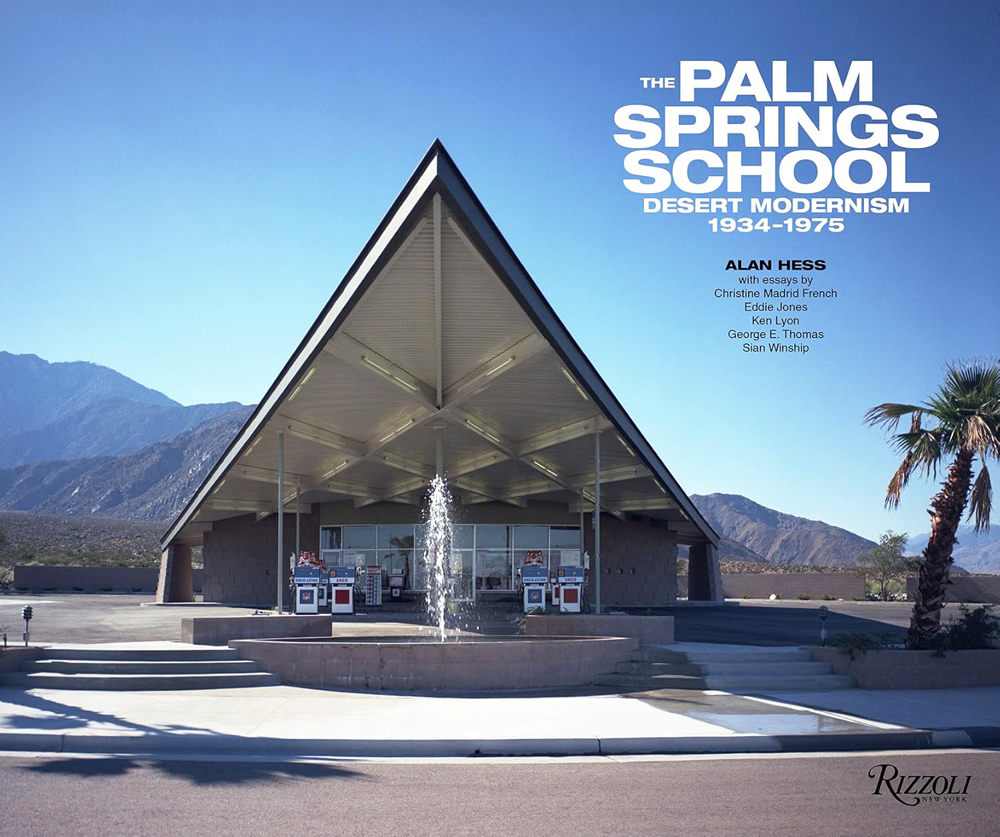
Indeed, Hess's essay in The Palm Springs School: Desert Modernism 1934-1975, which is the centerpiece of a new book that includes essays by five others, is a reshaping of the geography of modernism.
Hess's account of modern architecture flips the usual tale on its head. Rather than a movement that began exclusively in Europe, and then gradually moved to the United States and even more gradually to California, he sees an evolution in which California and other American regions played a leading role.
 |
Note Hess's comment on Richard Neutra, the Viennese modernist who is often described as importing modernism to California. Not quite. "Richard Neutra traveled 6,000 miles from Vienna to Southern California not to introduce modernism, but to learn and work in the modern environment that existed here," Hess says.
There are many books about Palm Springs modern architecture. But The Palm Springs School goes deeper, telling the story from its inception, profiling the leading architects, providing thumbnail resumes of others, and branching into such topics as the growth of spa culture and the importance of the Cahuilla Indians, who own much of the city.
Still, Hess's argument for the importance of Palm Springs and, by extension, California as a center of modernism, makes up the book's core.
 |
|
|
"The book is a wedge to get people to realize how important California modern architecture has been," Hess said in an interview. "I see the story as being one about California modern architecture, north and south."
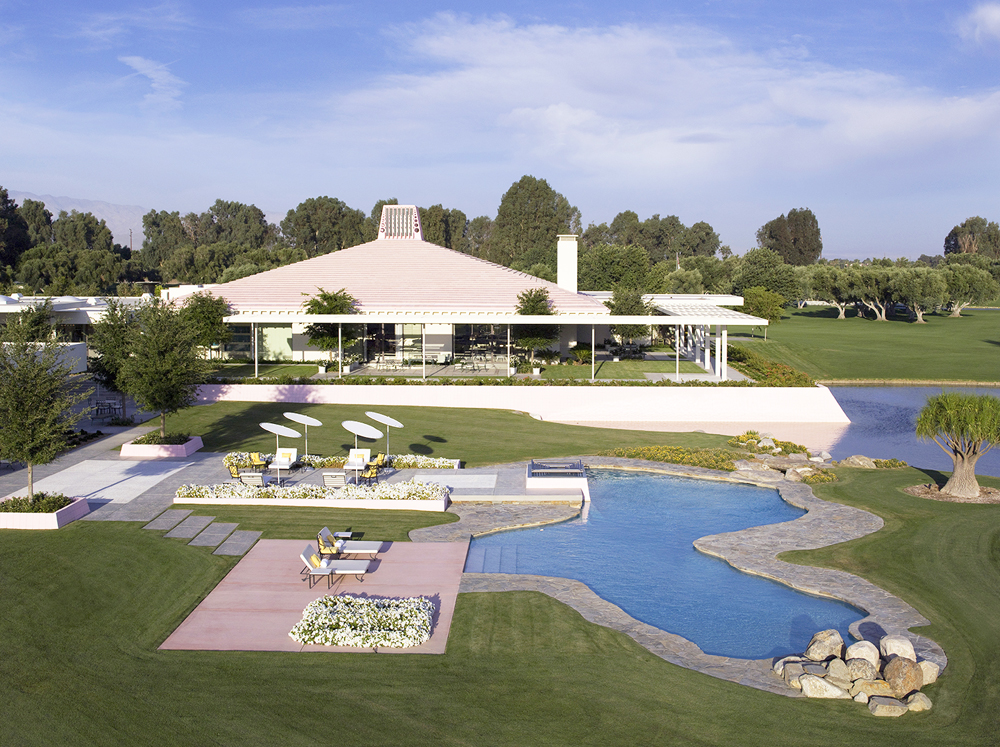
Simply asserting, as Hess does in the title, that there is such a thing as a distinctive 'Palm Springs School,' is brave, elevating the architecture of the city to a new level of historical importance. He sees the Palm Springs School as a variant of a California school of modernism that paid more attention to historical and environmental influences than many other modernists did.
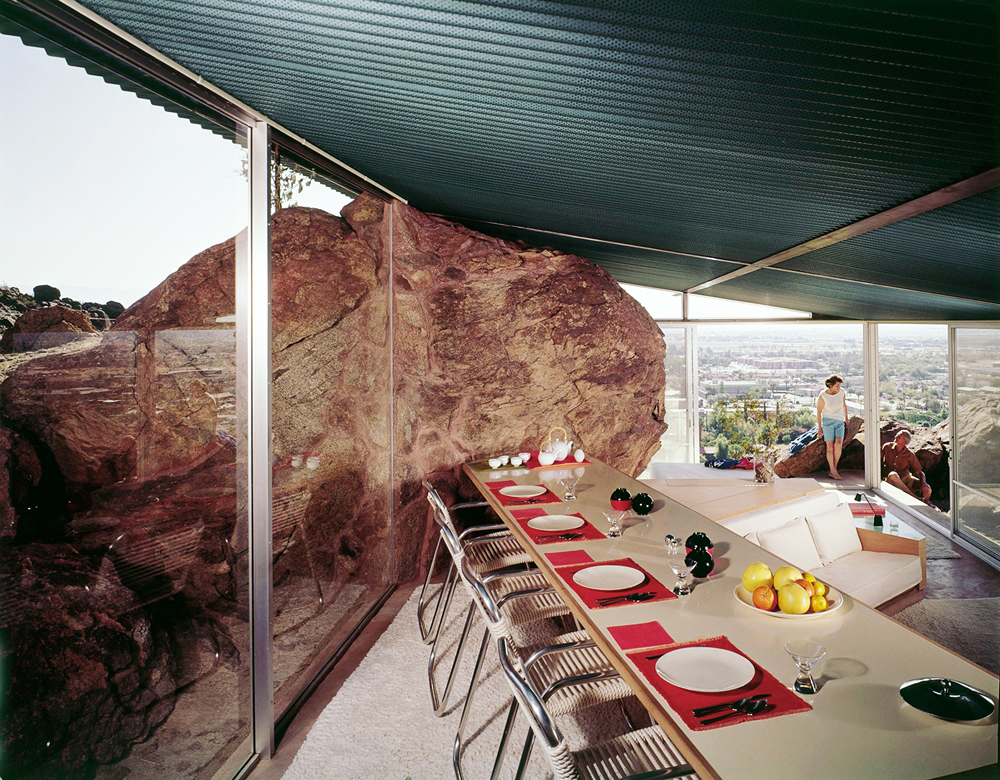
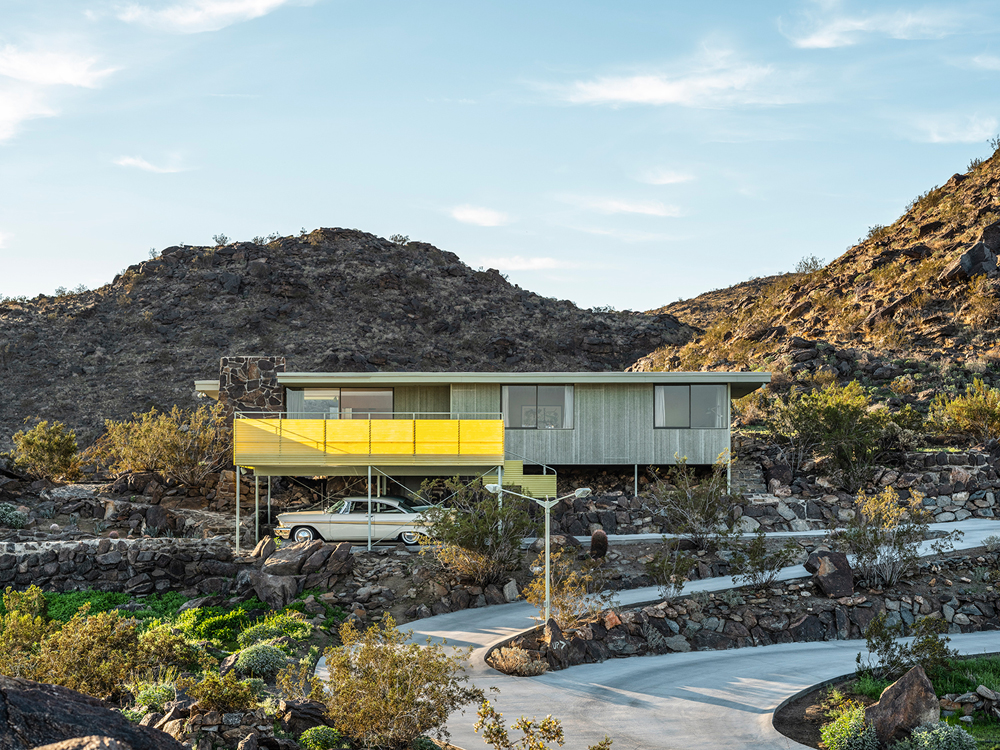
Products of the Palm Springs School were diverse in look and in materials, Hess writes, but partook of influences from the desert environment. Buildings might have jagged facades echoing the surrounding mountains. Colors were borrowed from desert plants. Homes sometimes encompassed large boulders and were built using streambed cobblestones. Cantilevered roofs, louvered screens, and sun visors dealt with the heat and sunlight.
 |
|
|
Palm Springs was a small and tight architectural community, furthering the sharing of ideas that would cohere into a school. "There was a period there when we'd meet about once a week for lunch and talk about what everyone was doing," observed Don Wexler, an important pioneer architect of the region.
Despite the amount of fine work happening in Palm Springs—a city where, modernist proponent Sidney Williams observes, there are "more mid-century modern buildings per capita than anywhere else in the country"—the Palm Springs School never gained much fame.
In part, Hess says, this was due to the "relative modesty of these architects. Generally they did not seek national publicity." And Palm Springs was remote from centers of architectural and critical power.
"Most critics would have considered [Palm Spring] an unlikely place to look for new directions in architecture," Hess writes. "The opinion persisted until the end of the 20th century. Palm Springs meant fun and pleasure, which mainstream critics—even modern ones—rarely associated with the serious business of modern architecture.
 |
|
|
The Palm Springs School book is a creation of the Palm Springs Architectural Alliance, a group made up of veterans of such other local groups at PS ModCom and Modernism Week.
Besides commissioning the authors and backing the book, the Alliance has put on a symposium on architect Albert Frey, is working to create a master of architecture program at the Palm Springs campus of the College of the Desert, seeks to preserve architecture in Palm Springs, and seeks to ensure that new buildings are as well designed as the classics.
"When people come to Palm Springs, we want them to be thrilled with what they see," says Sidney Williams, one of the founders of the Alliance, "not only architecture of the mid-century but architecture of today."
- ‹ previous
- 489 of 693
- next ›
Search